The Secret Behind Korea’s Maritime Power
At the 48th session of the World Heritage Committee, South Korea showcased its maritime heritage, which connects cultural heritage, history, and smart shipyards.
South Korea’s maritime future can be partly explained by its past. Long before building container ships of over 20,000 TEUs (twenty-foot equivalent units), developing large LNG carriers, or turning Busan into the world’s second-largest transshipment port, Koreans were already designing vessels specifically adapted to a peninsula marked by strong currents, large tides, and shallow coastal waters.
The scale changed, as did the materials, propulsion systems, and cargoes. But for centuries, the sea remained central to Korea’s transportation, trade, defense, and relations with other territories.
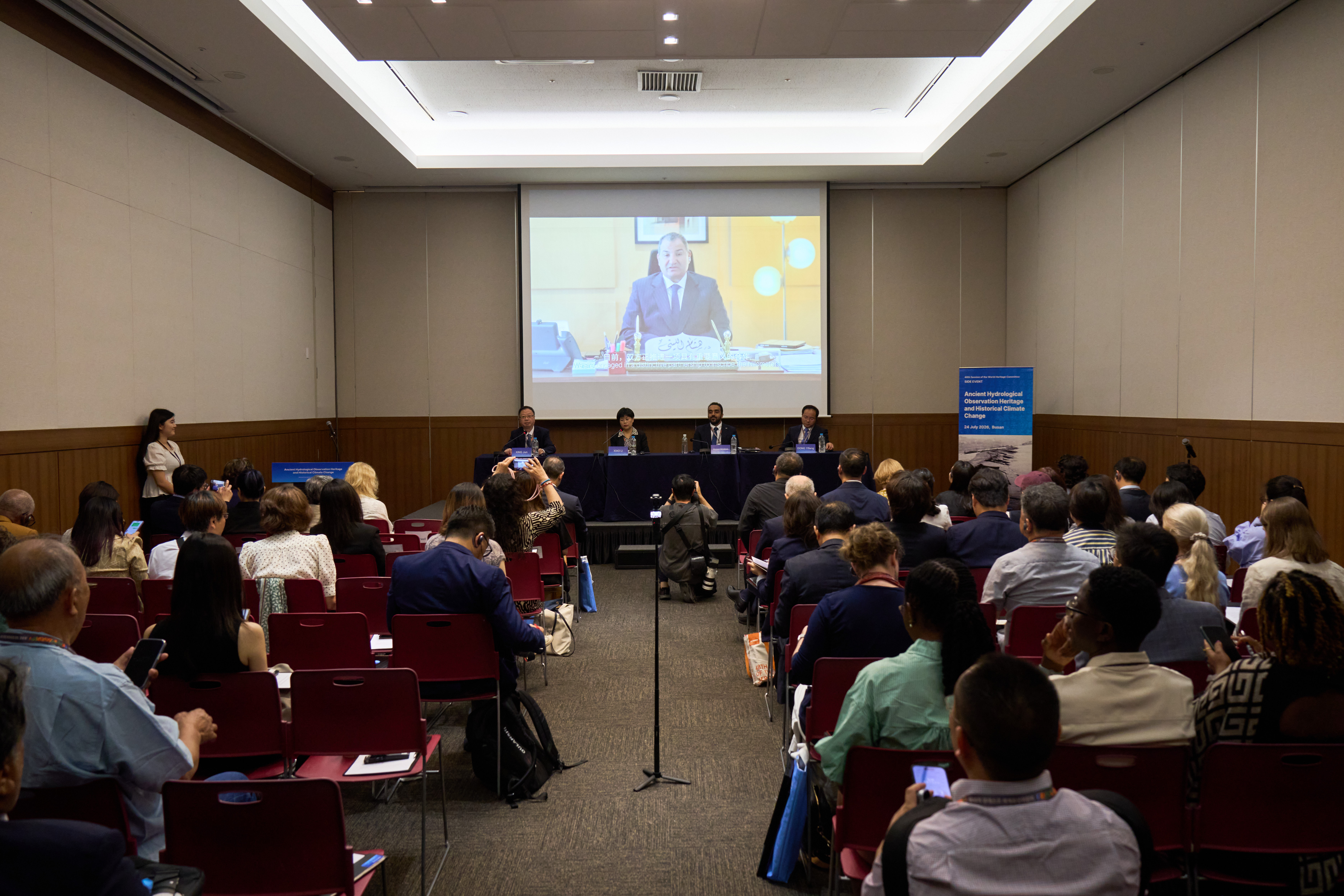
This bridge between the past and the future was highlighted during the 48th session of the World Heritage Committee, which was held in Busan from July 19 to 29. At BEXCO, the venue for the meeting, the Korean Heritage Pavilion showcased the work of the National Research Institute of Maritime Heritage (NRIMH), dedicated to researching and preserving this tangible and intangible legacy.
Shipwreck maps, artifacts recovered from the seabed, and ship reconstructions offered a condensed view of centuries of navigation. But behind these objects lay something less visible yet very valuable: the knowledge accumulated over centuries to build ships capable of navigating a complex geography.
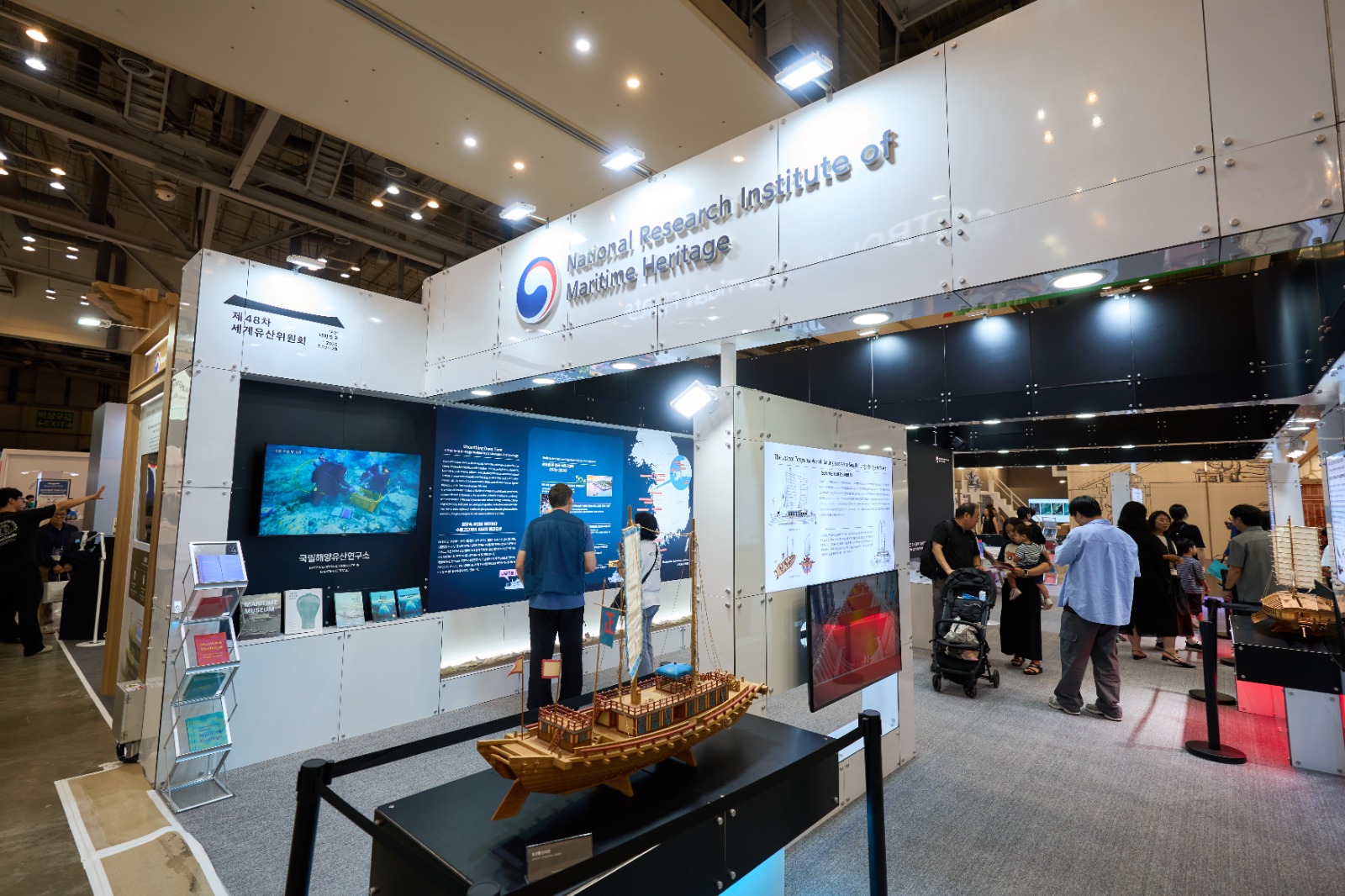
Korea’s maritime heritage takes center stage at the 48th session of the World Heritage Committee in Busan.
“Everything we learn about the past is useful for the future. For example, in the case of ships, these vessels were truly very well adapted to the maritime environment and the geography of Korea,” explained Alex Holland, an archaeologist at Busan University, during a tour of the booth with Transport & Cargo.
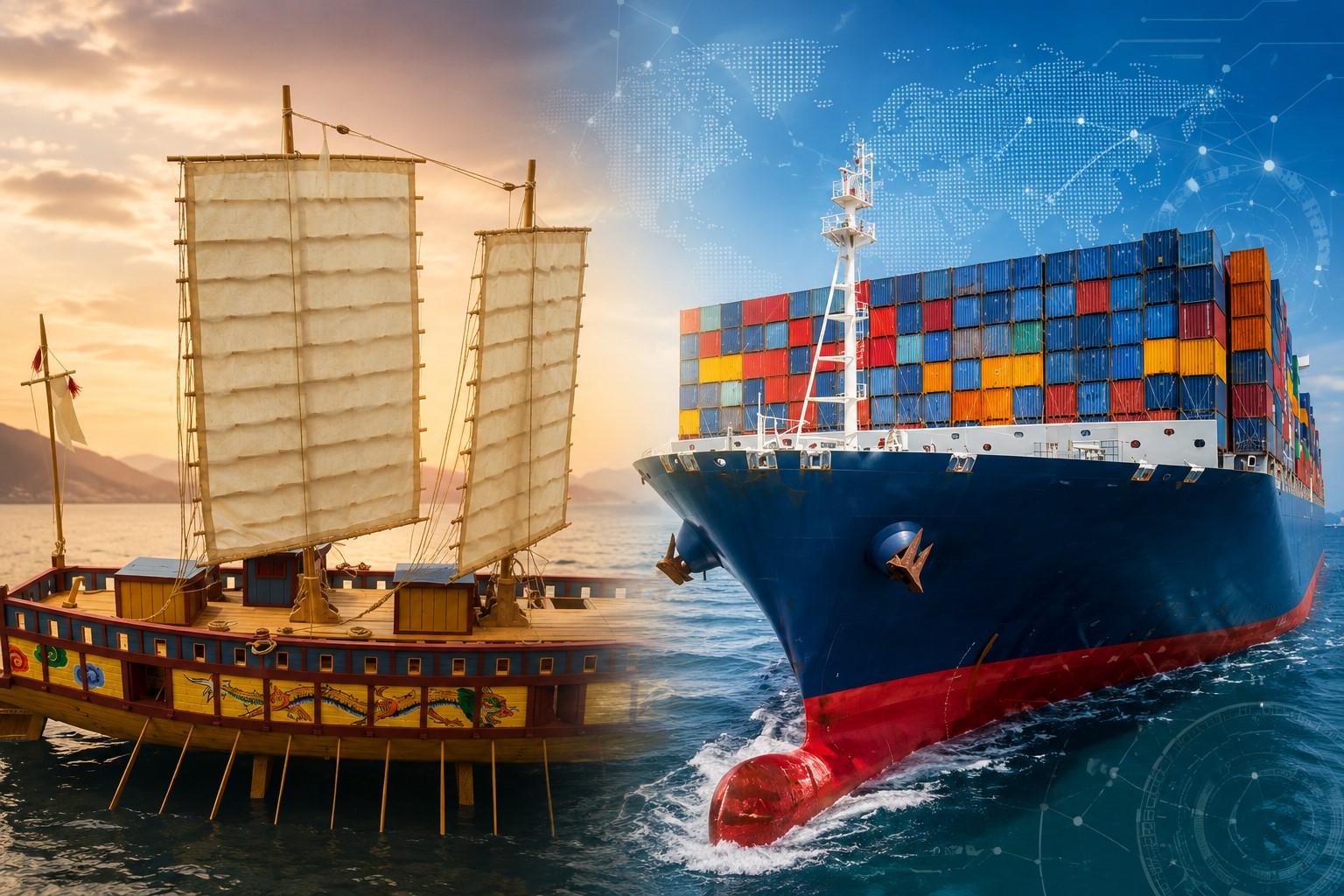
Centuries later, that specialization has taken on a new dimension: automated shipyards, high-value-added ships, and millions of containers.
Millennia-Old Maritime Heritage
Korean underwater archaeology has now been developing for half a century. The field began to take shape in the 1970s, following the discovery of Chinese ceramics off the coast of Sinan, which provided insights into the ancient maritime routes of East Asia.
Traditional Korean vessels, known as Hanseon, were developed specifically for the peninsula’s maritime conditions, characterized by shallow waters, large tidal ranges, and strong currents. Their flat-bottomed hulls provided stability, while wooden pegs were used instead of iron nails to assemble the structure—a technique that helped prevent corrosion caused by saltwater.
However, there was no single type of Hanseon. During the Joseon Dynasty, different types of boats were developed depending on their function. Government vessels were operated by central and local authorities to transport officials and carry out administrative tasks; privately owned fishing boats also used flat-bottomed hulls adapted to tidal zones; and grain transport ships played a crucial logistical role: they primarily carried grain collected as taxes from the provinces to the capital.
The design took on different characteristics when the purpose was military. The Panokseon, the Joseon Dynasty navy’s main warship, had two levels: rowers worked below deck while commanders and soldiers occupied the upper deck. The Geobukseon, or Turtle Ship, featured an enclosed upper deck with a protective wooden structure, gun ports, and a turtle or dragon head at the bow.
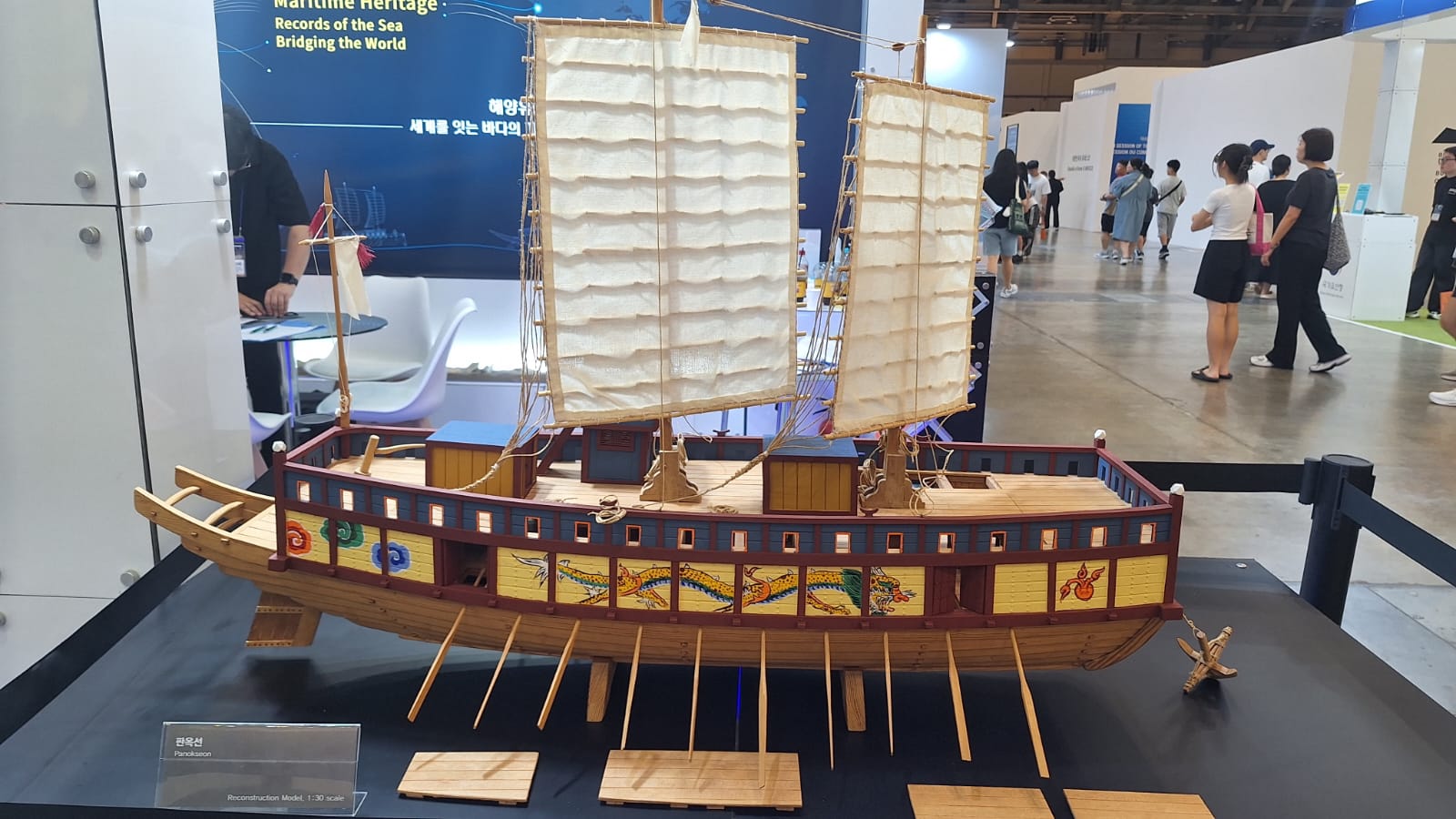
The Panokseon, an iconic warship of the Joseon Dynasty.
“For some of these ships, there are no shipwrecks to study. All we have are written records and some measurements. So they create a computer model and then test it in a kind of simulation environment,” Holland added.
After the Imjin War, the Joseon Tongsinsa missions carried out 12 expeditions to Japan between 1607 and 1811 to reestablish relations. Their records were added to UNESCO’s Memory of the World Register in 2017.
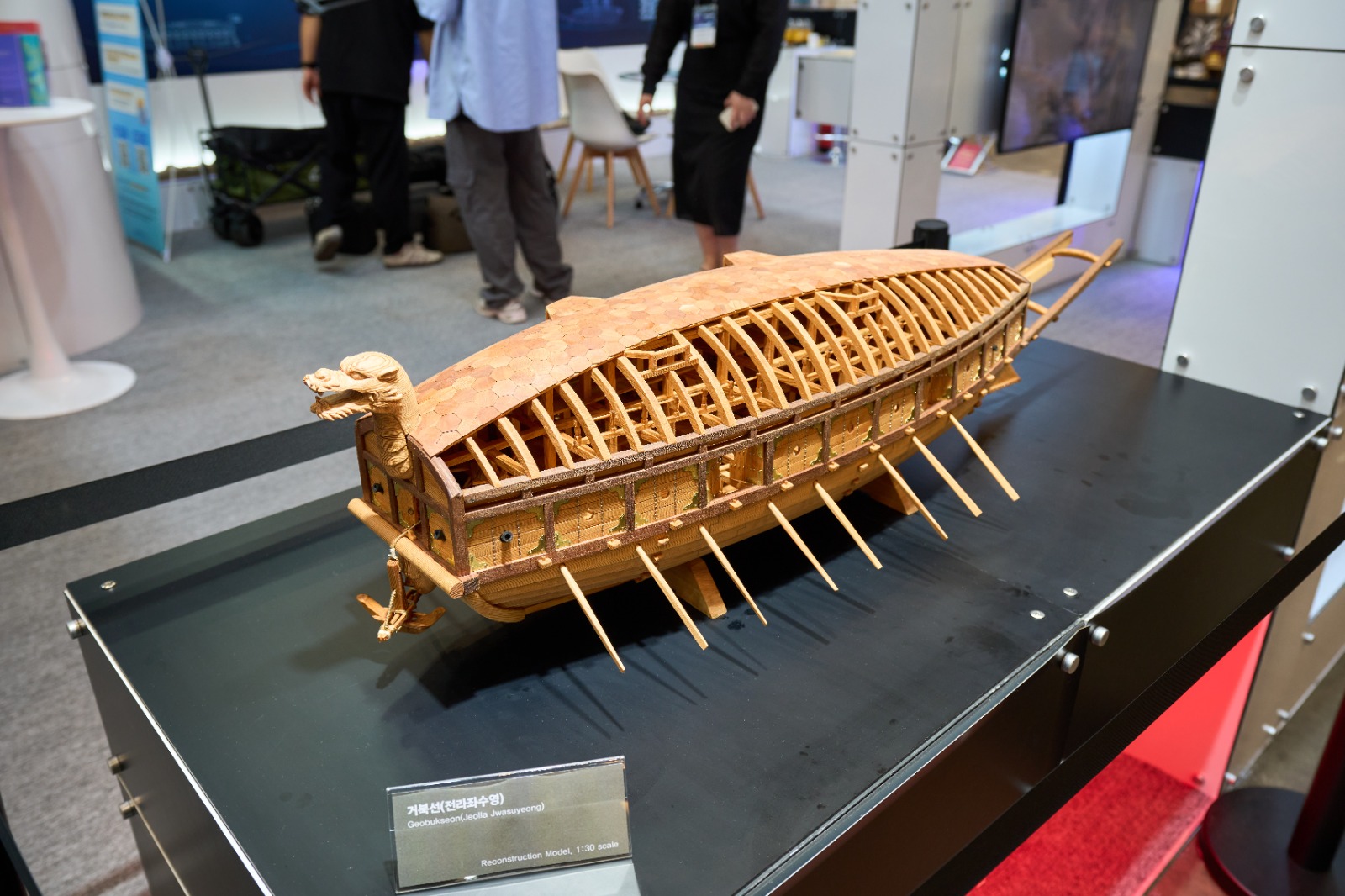
The Geobukseon, or “turtle ship,” one of the Joseon Dynasty’s warships.
Each expedition was a major undertaking. Holland noted that the voyages involved about five or six ships and between 400 and 500 people. The ships were equipped for long voyages and included, for example, separate galleys for fire safety reasons.
In 2015, the Institute began rebuilding one of these ships to full scale based on documents, paintings, and archaeological evidence. The vessel was launched in 2018; it is 34 meters long, weighs 149 metric tons, and, according to the BEXCO exhibition, has already sailed approximately 15,000 kilometers.
This naval heritage serves as the starting point for an industry that, centuries later, once again found a competitive advantage in technology.
A Cutting-Edge Industry
Modern Korean shipbuilding began to take shape in the early 1970s, when the government promoted the transition from a light-industry economy to heavy industries. The policy included support for the construction of shipyards, investment in equipment, and the creation of university departments of naval architecture.
The growth of international trade drove demand throughout the 1980s, and the industry expanded rapidly during the 1990s. For years, Korea held the top global position, until the financial crisis and the growth of China’s production capacity changed the landscape in the 2010s. The response was greater specialization.
One of the key factors was productivity. South Korea developed methods such as block construction—in which large sections of a ship are manufactured separately and then assembled—and shore-based construction followed by launch. It also incorporated information technologies, ERP systems, and integrated CAD software to improve shipyard efficiency.
Data provided by Clarkson Research shows the results of this strategy. In 2025, global new orders reached 58.4 million CGT, corresponding to 2,159 ships. China secured 35.37 million CGT and 1,421 units, accounting for 63%. South Korea ranked second with 11.60 million CGT, 247 ships, and 21%.
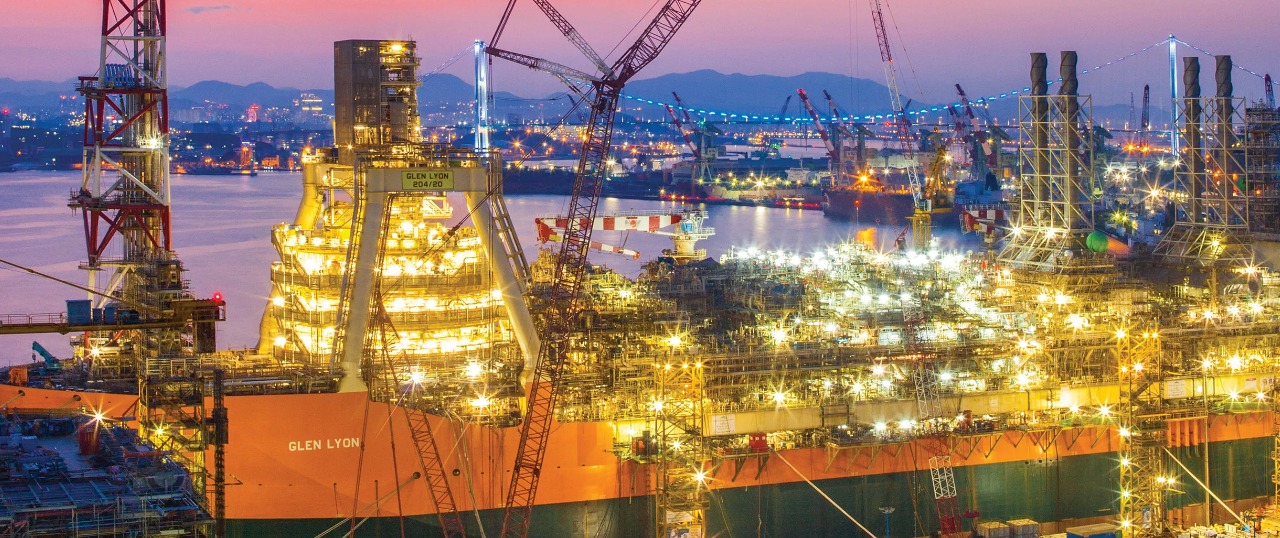
The Korean shipbuilding industry is focusing on high-value-added vessels and smart shipyards.
However, the comparison changes when looking at contracts in dollars. Korean orders were estimated at between US$23 billion and US$25 billion, compared to between US$20 billion and US$24.5 billion for China.
The explanation lies in the types of ships: South Korea specializes in container ships of more than 20,000 TEU, VLCCs, and large LNG carriers—vessels that require more advanced engineering and equipment.
Samsung Heavy Industries, Hanwha Ocean, and HD Hyundai Samho rank among the top ten. The recovery also extended to employment: after falling to 92,000 workers in 2021, the workforce reached 125,000 people in 2024.
Technology for the Past
Naval technology is also used to recover that past. The Institute uses specialized vessels for underwater research and archaeology, including the SEAMUSE, designed for
underwater excavations, and the NURIAN, used for surveys and maritime research.
The work combines these platforms with 3D scanning, photography, and high-precision recording systems—tools that are particularly important in an environment where, according to information displayed at BEXCO, archaeologists’ visibility can be reduced to about one meter.
Thus, these high-tech ships not only represent the future of the Korean shipbuilding industry; they are also a tool for locating, studying, and reconstructing the vessels of its past.
Ships of the Future
The next competitive challenge is no longer solely about the size of ships, but rather how they are built, how much energy they consume, and to what extent they will be able to navigate autonomously. The K-shipbuilding strategy aims to develop and lead the market for autonomous and eco-friendly vessels, with the goal of gaining a technological edge in a segment that is the focus of attention for the major naval powers.
Korea is now developing Smart Ships and Smart Shipyards. Shipyards are incorporating digitization and automation, while future vessels combine electric propulsion with systems capable of autonomously identifying optimal routes, with the goal of simultaneously improving economic and environmental efficiency.
The next phase incorporates artificial intelligence and big data. The development of digitally integrated eco-friendly ships that combine both technologies is emerging as one of the main directions for K-shipbuilding.
HD Korea Shipbuilding & Offshore Engineering plans to develop a 271,000 cubic meter LNG carrier, in addition to small and medium-sized 30,000 cubic meter LNG carriers.
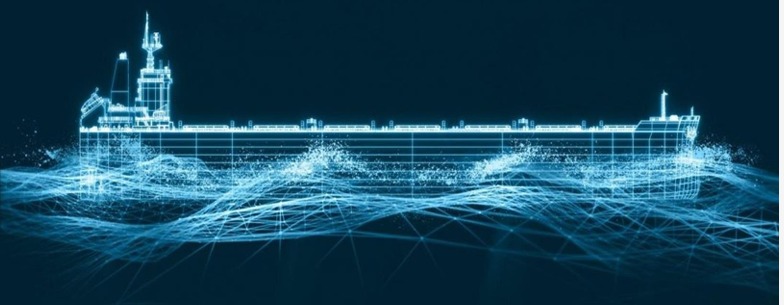
Korea aims to lead the way in the ships of the future with AI, big data, autonomous navigation, and electric propulsion.
This initiative has financial backing. According to the publication, approximately $176 million (260,000 million won) was allocated in 2025 to research and development of eco-friendly ships, the digital transformation of shipbuilding processes, and technology for autonomous vessels.
The connection to the heritage on display at BEXCO is particularly striking. Computers make it possible to reconstruct how a ship that disappeared centuries ago operated; artificial intelligence and data are now seeking to define how ships will navigate in the coming decades.
From the flat-bottomed Hanseon to the autonomous ships of the future, practically everything has changed except for the central role of the sea. The BEXCO exhibit allowed visitors to observe this bridge across which, for centuries, Korea has used knowledge and technology to figure out how to build ships, how to navigate, and how to connect with the world.